Last updated September 24, 2026
New windows and doors improve comfort, cut energy bills and add long-term value to your home. Sightline Windows & Doors Pinewood pairs proven product lines with our own installing crews for lasting performance - and a price we put in writing.
1. Choose your installer
The unit is half the job - the install is the other half. Our own background-checked crews measure, set, seal and insulate every opening, and they know the lines we quote inside and out because they install them every week.
2. Select the right products
Compare styles, materials and glass packages side by side until the fit is right for your rooms, your budget and your goals. The product-line comparison below is the place to start.
3. Prepare your home for install
Before install day we walk you through a short checklist - furniture pulled back, treatments down, a clear path to each opening - so install day is watch-it-happen, not scramble.
Compare the Lines We Quote
Every project is priced on the same lines, side by side - the price indicators below are relative, and your consultant shows exact numbers on your actual openings.
PGTThe line Florida homeowners arrive naming - the most Miami-Dade certifications in the industry$$$
- More Miami-Dade NOA certifications than any other line we quote
- WinGuard, EnergyVue and ClassicVue Max systems built for every wind zone
- 99% on-time delivery keeps your install date on the calendar
CGIThe heavyweight impact line$$$$$
- Large-missile impact ratings for the strictest wind zones
- Architectural-grade aluminum with commercial-depth frames
- The line we quote when protection is the whole point
CWSThe Florida value pick$$
- Vinyl systems built in Florida for Florida codes
- Strong energy packages at the friendliest price point
- The smart start for whole-home replacements on a budget
ESWSlim lines, big glass$$$$
- Narrow-sightline aluminum for modern elevations
- Oversized openings and floor-to-ceiling glass
- Impact-rated without the bunker look
ECOThe aluminum impact workhorse$$$
- Miami-built aluminum impact systems
- A strong price-to-protection ratio for coastal homes
- Proven inventory lines with short lead times
The Complete Guide to Windows & Doors in Pinewood
A window that carries an Energy Star label and sells without issue in Atlanta can be rejected by a Pinewood inspector before the truck finishes backing into your driveway. That’s not a quality problem with the glass. It’s a documentation mismatch between Georgia’s adopted codes and Florida’s High-Velocity Hurricane Zone requirements, and it costs homeowners thousands in restocking fees every year in Miami-Dade County adjacency. This guide explains what Pinewood’s flood-zone classification, salt-air exposure, and Florida Building Code impact-resistance thresholds actually mean for the windows and doors you can legally install, how much they cost, and how to read the paperwork that protects you. Browse more guides & resources for related Pinewood homeowner topics.
Quick Answer
Windows and doors installed in Pinewood, Florida must carry Florida Product Approval (FPA) or Miami-Dade Notice of Acceptance (NOA) documentation to pass inspection, with frame specs, anchor patterns, and glazing all matching the submitted drawings. For a typical Pinewood home, expect $650-$1,400 per opening for impact-rated vinyl windows, $2,800-$5,500 for sliding patio doors, and $1,200-$2,800 for impact-rated entry door systems, with flood-zone designation (AE, X, or VE) determining minimum sill heights and frame material requirements.
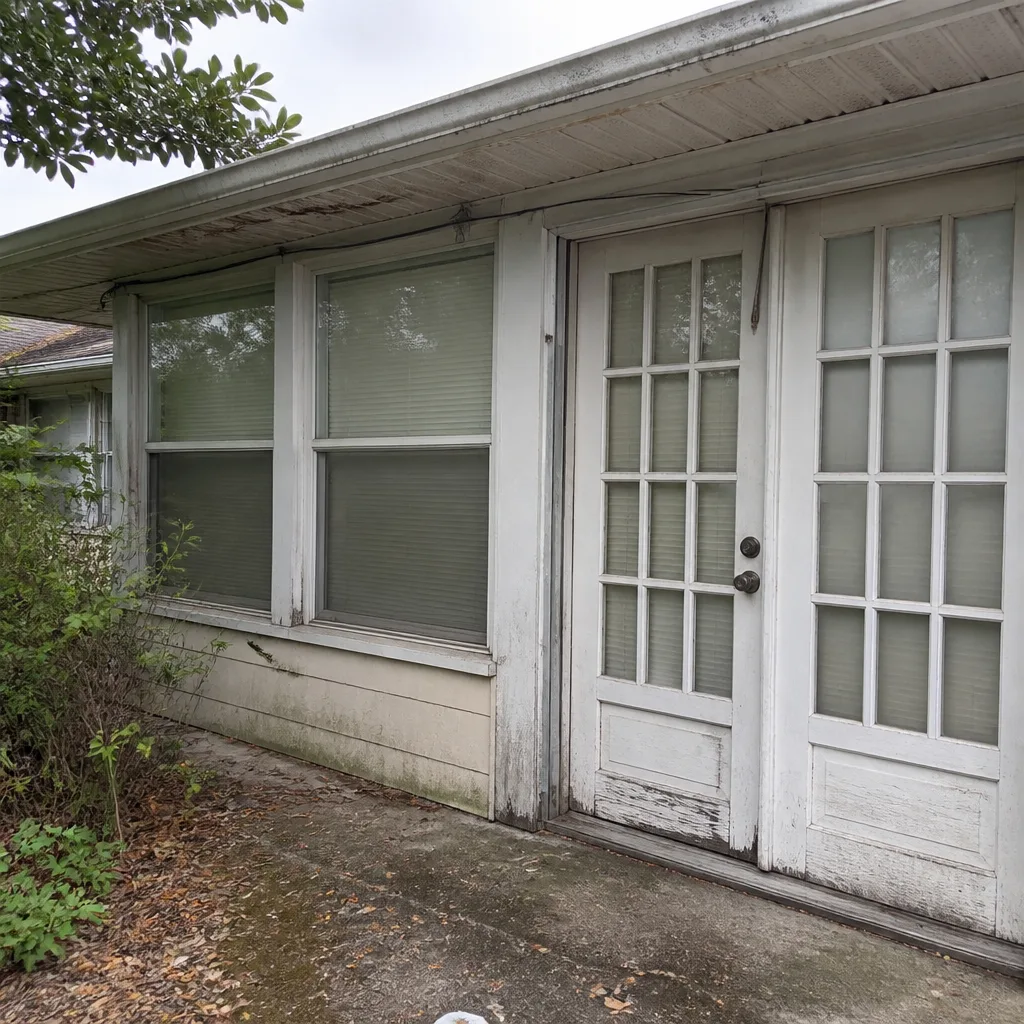 Before
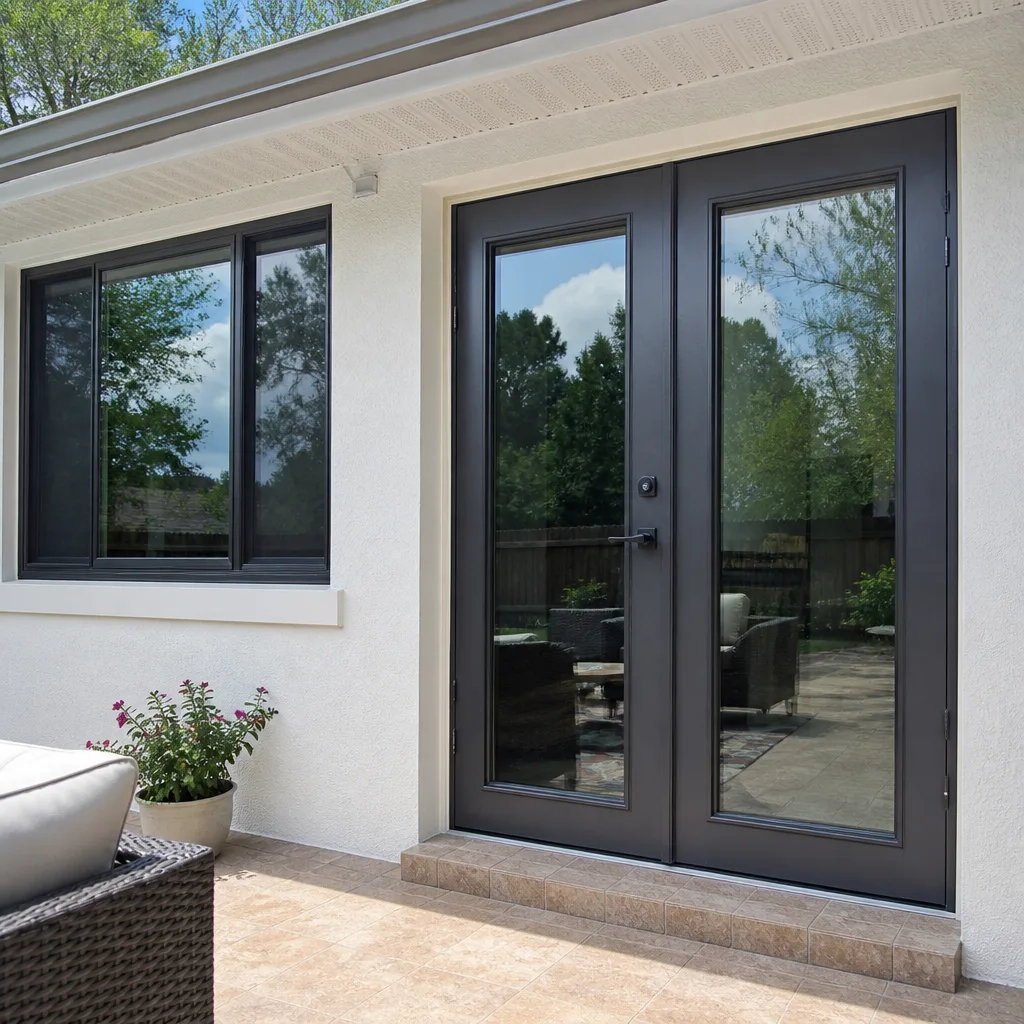 After
AfterTable of Contents
- Understanding Pinewood Building Codes: FPA vs. NOA
- How Pinewood Flood Zones Change Your Window and Door Specs
- Impact-Rated Glass vs. Hurricane-Rated Opening: The Documentation Gap
- Door Thresholds in Florida: Why Box-Store Pre-Hungs Fail Inspection
- Frame Materials and Salt-Air Exposure in Pinewood
- What Windows and Doors Cost in Pinewood: A Documented Range
- Choosing a Manufacturer Line for Your Opening
- The Installation Process: From Measured Survey to Final Record
Understanding Pinewood Building Codes: FPA vs. NOA
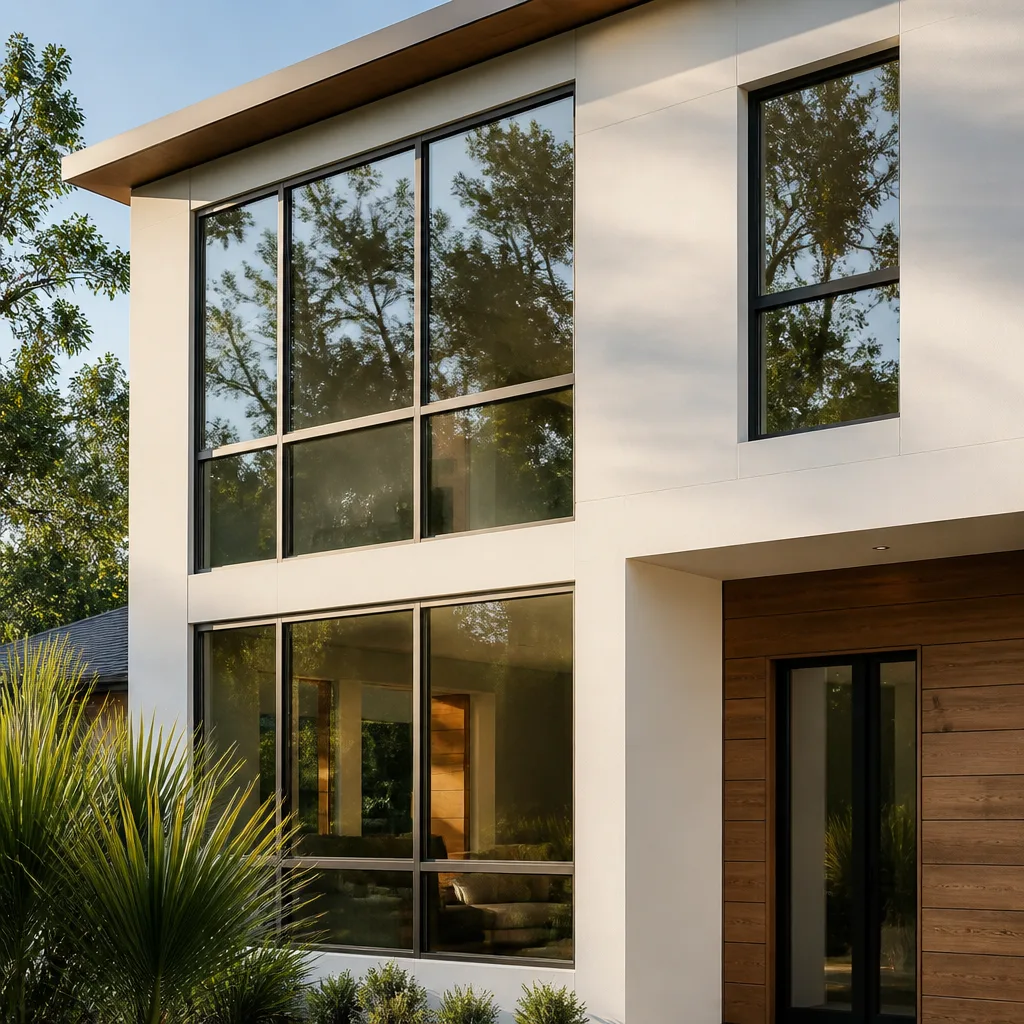
Florida operates a statewide product approval system, but Miami-Dade County maintains its own. Pinewood sits close enough to that boundary that both sets of numbers appear on jobsites, and the difference matters.
A Florida Product Approval (FPA) number means the Florida Building Commission has reviewed test data for wind load, impact resistance, and pressure cycling. A Miami-Dade Notice of Acceptance (NOA) means Miami-Dade County’s own testing lab has run additional protocols, typically more stringent for large missile impact and cyclic pressure. For most of Pinewood, either document satisfies the building department, but there’s a catch: the product label, the shop drawings, and the permit application must all reference the same number. We’ve seen homeowners bring us a window with an FPA sticker and a permit pulled under an NOA submittal. The inspector stops work until the paperwork aligns.
Here’s how to read what matters:
- Find the approval number on the product label. It will read “FL” followed by digits for FPA, or “NOA” followed by digits for Miami-Dade.
- Cross-check the design pressure rating (DP). Pinewood’s wind speed zone requires minimum DP ratings that vary by opening height and exposure category. A second-story corner window faces higher pressure than a first-story opening shielded by a porch.
- Verify the anchor pattern in the submittal. The approved drawing shows fastener type, spacing, and embedment depth. Deviating voids the approval.
- Confirm the glazing matches. The label lists glass thickness, interlayer type, and dimensions. Substituting laminated glass from another supplier breaks the chain of documentation.
The window installation process in Pinewood starts with pulling the correct submittal package before any frame is ordered. At Sightline, the measured survey we complete on first visit includes a photograph of every existing label and a notation of which approval body the replacement must match. That document becomes the scope of work; the written quote references it by page number.
How Pinewood Flood Zones Change Your Window and Door Specs
Pinewood parcels fall across three FEMA flood-zone classifications: AE, X, and VE. Each changes what you can install before you choose a single product feature.
AE zones cover much of central Pinewood. These are areas of 1% annual flood risk with base flood elevations determined. For windows and doors, AE designation means:
- Minimum sill height at or above the base flood elevation (BFE) plus any community-mandated freeboard
- Pressure-treated or flood-damage-resistant materials required below the BFE
- Ventilation openings in foundation walls must be flood-rated, not standard crawl-space vents
- Documentation of elevation certificate on file with the permit application
X zones are outside the 1% flood risk area. Sill height requirements relax, and standard frame materials are permitted at grade. This is where most vinyl window installations occur without elevation complications.
VE zones are coastal high-hazard areas with velocity wave action. In Pinewood’s VE parcels, typically closer to the water, the requirements tighten further:
- Breakaway wall construction below BFE; windows and doors in these walls must be designed to release under flood load
- All materials below BFE must be flood-damage-resistant, which excludes standard vinyl and most aluminum frames without specific coatings
- Additional documentation from a licensed engineer for any non-breakaway opening
We’ve measured homes in Pinewood where the front elevation sits in AE and the rear, sloping toward a canal, touches VE. The same house needs two specification packages. The measured survey we leave with the customer notes the zone boundary on the sketch; the written quote separates the openings by zone so there’s no confusion about why one bedroom window costs more than its mirror across the hall.
Impact-Rated Glass vs. Hurricane-Rated Opening: The Documentation Gap
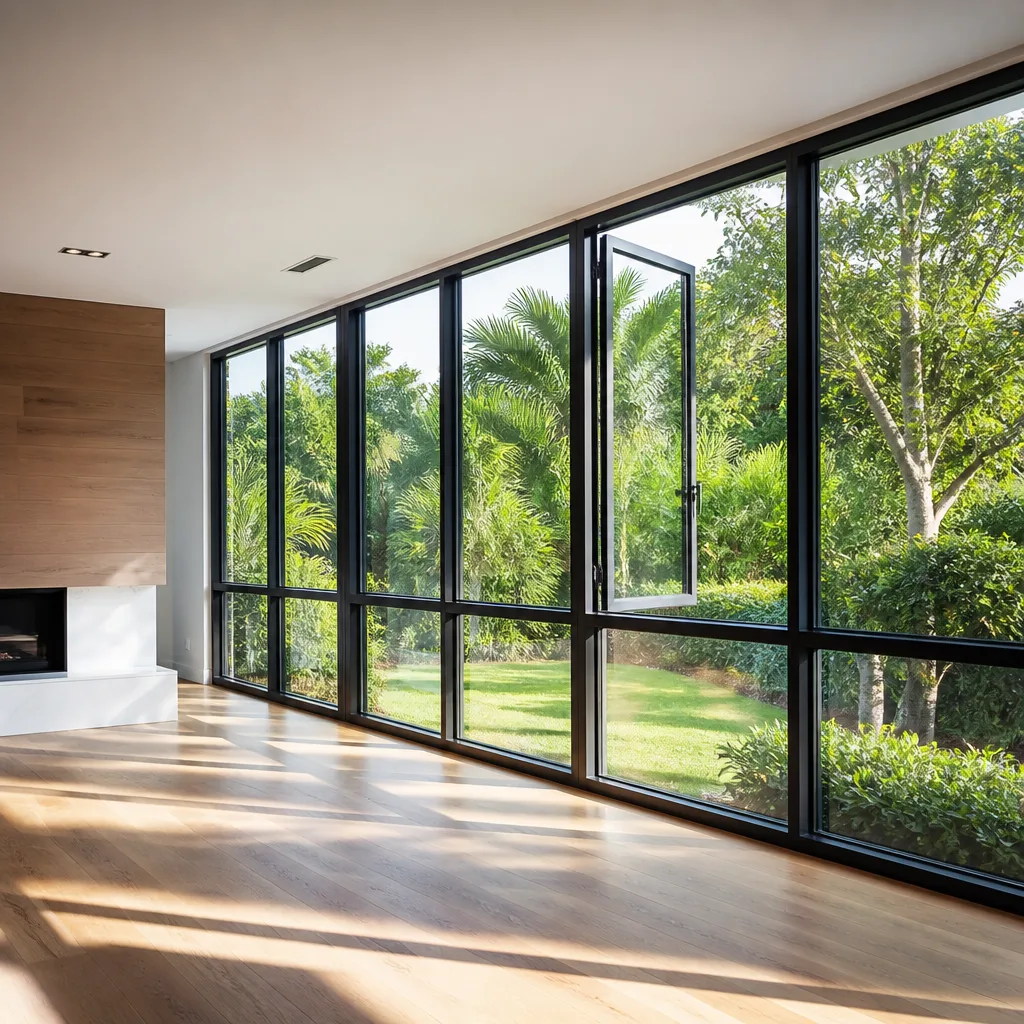
This distinction costs Pinewood homeowners more money in failed inspections than any other misunderstanding in our experience.
Impact-rated glass means the glazing itself, laminated with a polyvinyl butyral (PVB) or ionoplast interlayer, has passed large and small missile impact tests per ASTM E1886 and E1996. The glass carries a rating. But glass alone does not make a legal installation in Pinewood.
A hurricane-rated opening requires three separately documented components, all tested and listed together:
- The glazing assembly - glass, interlayer, and in some cases the spacer system - with impact and cycling test reports
- The frame system - vinyl, aluminum, or composite profile - with its own structural test data showing it retains the glass under pressure and impact
- The anchorage system - fasteners, embedment, and attachment to the structural wall - with specified spacing, diameter, and minimum penetration into wood or concrete
The “buck,” or the structural framing between the window unit and the rough opening, is the fourth element inspectors examine. In Pinewood, we’ve seen impact glass in a rated frame fail because the buck was untreated lumber in an AE flood zone, or because the contractor used the fastener spacing from a different approval drawing.
The window replacement process in Pinewood must verify all four elements. At Sightline, Haven Clause 4 (Evidence on Every Job) means we photograph the label, the buck, the fastener pattern, and the final seal before the trim goes on. The customer receives those photos with the completion documentation.
Door Thresholds in Florida: Why Box-Store Pre-Hungs Fail Inspection
A standard pre-hung exterior door purchased from a national retailer and installed in most Pinewood parcels will fail inspection for at least two reasons, often three.
First, the threshold. Florida’s frequent driving rain and Pinewood’s flat grade mean water intrusion standards exceed what standard residential pre-hungs are tested for. A legal threshold in Pinewood must demonstrate:
- ADA-compliant height differential, maximum 1/2 inch at the interior side
- Positive drainage slope to the exterior
- Sealing that meets ASTM E330 pressure differential testing
- In AE and VE zones, flood barrier rating or breakaway design documentation
Second, the frame and jamb assembly. Box-store pre-hungs typically ship with finger-jointed pine jambs and basic weatherstripping. Pinewood’s wind load requirements demand pressure-rated frames with reinforced corners, multi-point locking hardware, and weatherseals tested to cycling standards. The pre-hung may carry an Energy Star label; it almost never carries FPA or NOA documentation for the assembly as installed.
Third, the sidelight or transom integration. Many Pinewood homeowners want natural light beside or above the entry door. A pre-hung with an unlisted sidelight kit creates an untested opening. The inspector will ask for approval documentation for the combined assembly. There isn’t any.
The door installation process in Pinewood specifies the threshold, frame, hardware, and any adjacent glazing as a single system. Sightline Windows & Doors Pinewood sources entry systems from Therma-Tru and PGT with full FPA documentation for the complete assembly, including multi-point lock engagement patterns and sill pan flashing details.
Frame Materials and Salt-Air Exposure in Pinewood
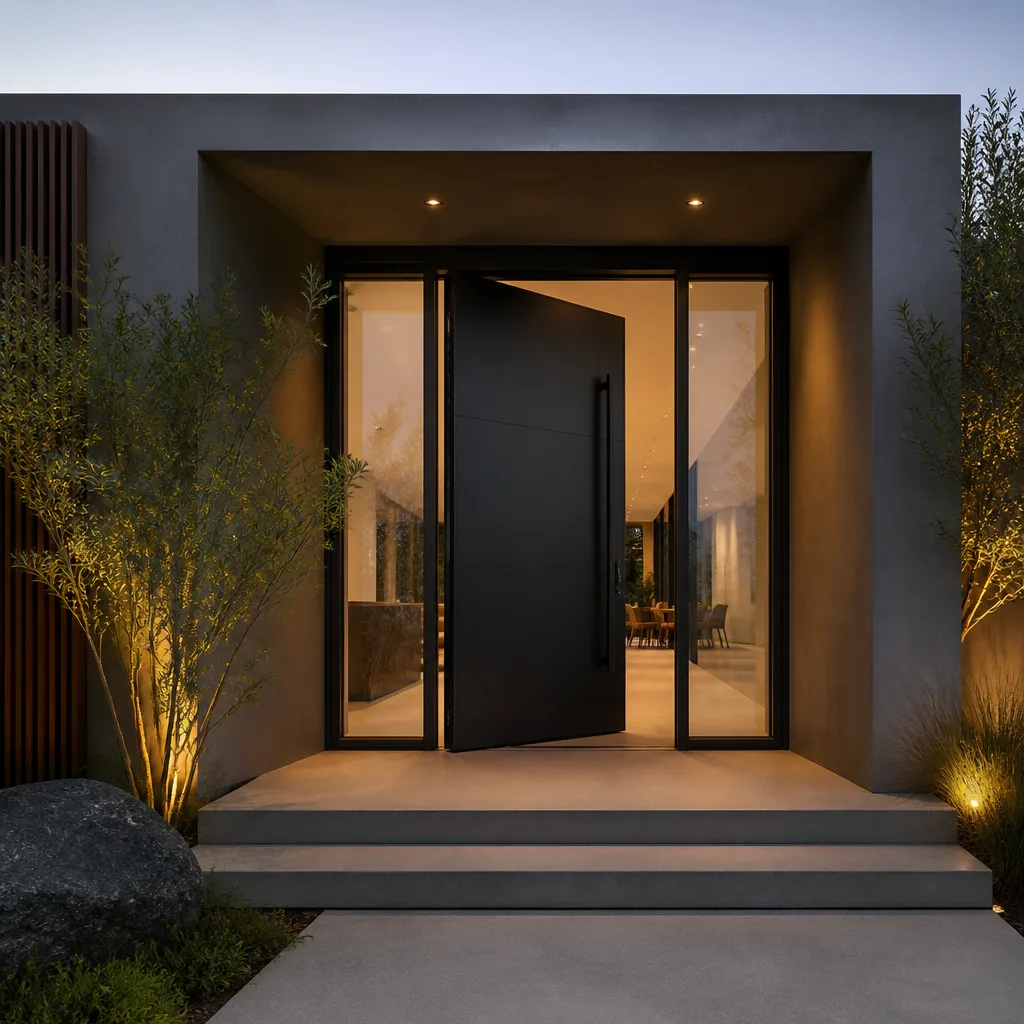
Pinewood’s proximity to Biscayne Bay and the Atlantic creates salt-air exposure corridors that accelerate corrosion on standard aluminum and degrade certain vinyl formulations. The material choice for frames should account for distance from the water, elevation, and the home’s specific microclimate; see our Seasonal Windows & Doors Care for Pinewood: Year-Round Homeowner’s Guide for maintenance timing.
Vinyl (uPVC) dominates Pinewood installations for cost and thermal performance. Quality varies. Coastal-grade vinyl includes titanium dioxide stabilizers and impact modifiers that resist UV degradation and salt crystallization. Budget vinyl without these additives chalks and becomes brittle within eight to ten years in Pinewood’s exposure. We specify ECO Window Systems vinyl for mid-range Pinewood openings; their coastal formulation carries a 20-year documented performance record in South Florida.
Aluminum offers strength for large openings and narrow sightlines, but standard anodized aluminum corrodes in salt air. Coastal-grade aluminum requires either 70-micron anodizing or Kynar 500 fluoropolymer paint. PGT’s aluminum impact line uses these specifications; we’ve installed their products in Pinewood waterfront homes where standard aluminum failed within five years.
Composite and fiberglass bridge the gap. Therma-Tru’s fiberglass door frames resist moisture and thermal transfer, performing well in Pinewood’s humidity. Mr-Glass manufactures composite window frames with aluminum exteriors and thermal-break interiors that we’ve specified for Pinewood homes needing narrow profiles without the maintenance schedule of bare aluminum.
The measured survey notes the home’s distance from salt water, orientation, and any vegetation buffering. That data drives the material recommendation, not a standard package.
What Windows and Doors Cost in Pinewood: A Documented Range
These ranges reflect Sightline’s written quotes in Pinewood from 2022-2024, including product, labor, permit, and standard trim. Every project receives its own measured survey and line-item quote; these figures establish ballpark expectations before that conversation.
| Opening Type | Size Range | Material / Rating | Installed Range |
|---|---|---|---|
| Single-hung vinyl window | 24″ × 36″ to 36″ × 60″ | Impact-rated, coastal vinyl | $650 - $1,100 |
| Horizontal roller window | 48″ × 36″ to 72″ × 48″ | Impact-rated, coastal vinyl | $850 - $1,400 |
| Picture window (fixed) | 48″ × 48″ to 60″ × 72″ | Impact-rated, aluminum or vinyl | $1,100 - $2,200 |
| Sliding glass door | 72″ × 80″ to 144″ × 80″ | Impact-rated, multi-panel | $2,800 - $5,500 |
| French door system | 60″ × 80″ to 72″ × 96″ | Impact-rated, aluminum or fiberglass | $3,200 - $6,800 |
| Entry door with sidelights | 36″ × 80″ door + sidelights | Fiberglass or steel, impact glazing | $2,400 - $4,800 |
| Impact garage door | 8′ × 7′ to 18′ × 8′ | Wind-rated, reinforced | $1,800 - $3,800 |
| Custom geometric window | Varies by design | Impact-rated, custom fabrication | $1,400 - $4,500 |
Variables that move quotes within these ranges:
- Flood-zone requirements. AE and VE zones add elevation documentation, pressure-treated bucks, and sometimes engineer review. Typically $150-$400 per opening.
- Stucco or masonry exterior. Cutting and patching stucco adds labor; matching texture and color requires skilled trades. Typically $200-$500 per opening.
- Interior trim replacement. Standard trim is included; custom millwork or hardwood is additional.
- Permit and inspection fees. Pinewood building department fees vary by project scope; we list these as a separate line item, not buried in overhead.
Haven Clause 1 means the measured survey and the written quote are the same document. The price does not change once work starts unless the customer adds scope.
Choosing a Manufacturer Line for Your Opening
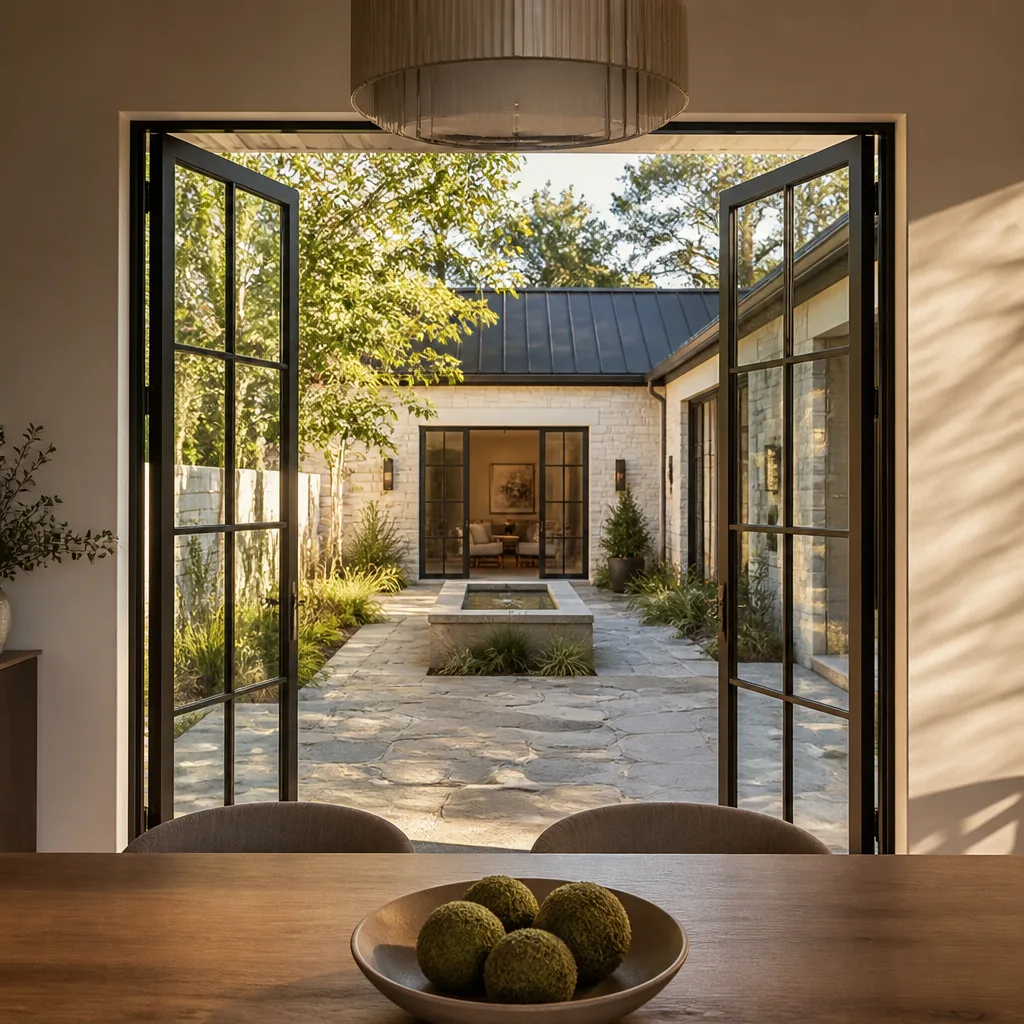
Sightline specifies from eight manufacturer lines, selected by what the opening requires, not by what is in stock. Here’s how we match product to condition in Pinewood:
PGT for large impact openings and waterfront exposure. Their WinGuard aluminum and vinyl lines carry extensive NOA documentation; we’ve used PGT for corner windows in Pinewood’s VE-zone homes where design pressures exceed 70 psf. The sightlines are wider than some competitors, but the structural margins are documented.
ECO Window Systems for mid-range vinyl replacement in Pinewood’s AE and X zones. Their coastal vinyl formulation balances cost and salt-air resistance; U-factors around 0.30 and SHGC near 0.25 meet Florida energy code without premium pricing. We specify ECO for the typical 1,400-square-foot Pinewood ranch built 1960-1985.
Therma-Tru for entry door systems requiring narrow profiles and thermal performance. Their fiberglass frames don’t conduct heat like aluminum, and the impact-rated door slabs with SentryGlass interlayers have passed Miami-Dade large missile testing. We pair Therma-Tru with multi-point hardware for Pinewood homes where the entry door is fully exposed to east or southeast weather.
Mr-Glass for custom geometric and architectural openings. Their fabrication capability for radius tops, octagons, and trapezoids includes impact-rated glazing and matching FPA documentation. We’ve used Mr-Glass for a Pinewood mid-century modern where the clerestory windows were irregular polygons requiring site-measured templates.
The specification process: we measure the opening, note the exposure, flood zone, and existing conditions, then recommend two product lines that satisfy the technical requirements. The customer sees the performance data for both, not a single take-it-or-leave-it option.
The Installation Process: From Measured Survey to Final Record
Every Sightline installation in Pinewood follows the same sequence, governed by the Haven Standard since 2012:
- Measured survey. We arrive with calibrated digital measuring tools, photograph every existing opening and its labels, note wall construction type, and sketch each opening with dimensions to the eighth inch. The customer keeps this document. It becomes the basis for the quote and the permit application.
- Written quote. Haven Clause 1: the price is itemized by opening, with product line, performance specs, and labor separated. The quote references the survey page numbers. The customer signs once to approve; the price is fixed.
- Permit application. We pull the permit with the correct FPA or NOA submittals, elevation certificate if required, and engineered drawings for any non-standard condition. The customer receives a copy of the approved permit.
- Product order and receipt verification. When product arrives, we verify labels against the approved submittal before scheduling installation. Mismatched labels are returned; correct product is confirmed with photographs.
- Installation. Verified crews arrive in uniform, identified by license number. The installation follows the approved anchor pattern, with photographs of the buck, fasteners, and flashing at each opening.
- Inspection and completion. We schedule the building inspection; if corrections are required, we make them and reschedule. Upon pass, the customer receives the documented photo record, warranty documentation, and final invoice matching the original quote.
The 365-Day Done Right Promise means if any element fails to match the documented scope, we return and correct it at no charge. The promise is written, not verbal, and stamped on every job record.
Common Mistakes to Avoid
- Assuming Energy Star equals Florida approval. Energy Star measures thermal performance. Florida Product Approval measures structural, impact, and pressure performance. A window can carry one, both, or neither. Verify before ordering.
- Ignoring flood zone on the property appraiser site. Pinewood’s FEMA maps have been revised; a home that was X zone in 2010 may be AE today. Check current designation before specifying sill height.
- Accepting a quote without product labels specified. “Or equal” language in a quote allows substitution with unverified product. The quote should list manufacturer, model, and approval number.
- Installing standard pre-hung doors in AE or VE zones. The threshold and frame won’t pass inspection, and the water intrusion exposure is real in Pinewood’s rain patterns.
- Neglecting the buck condition. Rotted or improperly specified bucks fail inspection even when the window itself is fully approved. The measured survey should include buck assessment.
- Choosing product by price alone in salt-air exposure. Coastal-grade vinyl and properly coated aluminum cost more upfront. Standard materials fail faster in Pinewood’s environment, making the “savings” expensive within a decade.
When to Call a Professional
Call a window and door professional when your project involves any of the following: impact-rated requirements, flood-zone elevation complications, stucco or masonry exterior, custom or oversized openings, multi-panel door systems, or any installation where the permit application references FPA or NOA documentation. These conditions exceed the scope of handyman or self-performed work-see our DIY vs Professional Windows & Doors: The Pinewood Homeowner’s Decision Guide-and carry inspection consequences that delay occupancy or sale.
Sightline Windows & Doors Pinewood offers free estimates in Pinewood, with measured surveys and written quotes that become the scope of work. Call (786) 574-6217 to schedule. We also provide free second opinions on any written estimate from another contractor; bring us their quote and we will review the product specifications, approval documentation, and pricing at no charge. If you’re still choosing who to hire, read How to Hire a Windows & Doors Contractor in Pinewood: A Step-by-Step Guide.
Frequently Asked Questions
For a 1,400-square-foot Pinewood home with 10-12 openings, expect $8,500-$16,000 installed for impact-rated vinyl windows, depending on size mix, flood-zone requirements, and exterior finish type. Call (786) 574-6217 for a measured survey and exact written quote; estimates are free.
Florida Product Approval (FPA) is statewide; Miami-Dade Notice of Acceptance (NOA) is county-specific and typically more stringent. Most Pinewood homes accept either, but the permit application, product label, and shop drawings must all reference the same approval number. Your contractor should verify which your specific permit requires before ordering.
In most Pinewood parcels, no. Standard pre-hung exterior doors lack the pressure rating, threshold drainage, and impact documentation required by Florida Building Code. AE and VE flood zones add additional requirements for materials and elevation that box-store products do not meet.
At Sightline, no. Haven Clause 1 states that the measured survey and the written quote are the same document. The price is fixed when you sign the quote. Changes occur only if you add scope, and then only with a written change order you approve.
Most residential projects of 8-15 openings complete in 2-4 working days after product delivery. Permits in Pinewood typically issue in 5-10 business days; inspections schedule within 2-3 days of request. Total timeline from signed quote to completion is usually 4-8 weeks, depending on product lead times.
Sightline pulls all permits as part of standard scope. The customer receives a copy of the approved permit and inspection results. This is included in the written quote, not an additional fee.
The Bottom Line
Pinewood’s position near Miami-Dade’s High-Velocity Hurricane Zone, combined with its varied flood-zone designations and salt-air exposure, makes window and door selection a documentation exercise first and a product choice second. The legal installation requires matching approvals across glazing, frame, anchorage, and buck; the durable installation requires materials specified for coastal conditions. Cost ranges are knowable before any contractor visits, and the quote process should leave you with written evidence, not verbal assurances. Start with the flood zone, verify the approval chain, and demand that the measured survey and the final invoice reference the same document.
Call (786) 574-6217 to schedule your free estimate in Pinewood. We will complete a measured survey, review your existing documentation, and provide a written, line-item quote with no obligation.
Written by Sonia Raman, Owner at Sightline Windows & Doors Pinewood, serving Pinewood since 2012.
Six Reasons Homeowners Choose Sightline Windows & Doors Pinewood
Impact systems engineered to design pressures up to +/-100, matched to your wind zone - your openings hold when the storm arrives.
Low-E insulated impact glass from our manufacturer lines commonly cuts monthly cooling bills 20-30%.
Laminated impact glass shuts out up to 40% of outside noise - traffic, neighbors, weather.
Monitoring services run $30-90 a month. Laminated impact glass resists forced entry around the clock, with no subscription.
Florida homeowners average around 25% savings on the windstorm portion of their policy after protecting every opening - some homes qualify for more.
A full impact package upgrades curb appeal, buyer confidence and appraised value in one project.
Other Sightline Windows & Doors Pinewood Services
What Neighbors Say About Sightline Windows & Doors Pinewood