Last updated September 24, 2026
New windows and doors improve comfort, cut energy bills and add long-term value to your home. Sightline Windows & Doors Pinewood pairs proven product lines with our own installing crews for lasting performance - and a price we put in writing.
1. Choose your installer
The unit is half the job - the install is the other half. Our own background-checked crews measure, set, seal and insulate every opening, and they know the lines we quote inside and out because they install them every week.
2. Select the right products
Compare styles, materials and glass packages side by side until the fit is right for your rooms, your budget and your goals. The product-line comparison below is the place to start.
3. Prepare your home for install
Before install day we walk you through a short checklist - furniture pulled back, treatments down, a clear path to each opening - so install day is watch-it-happen, not scramble.
Compare the Lines We Quote
Every project is priced on the same lines, side by side - the price indicators below are relative, and your consultant shows exact numbers on your actual openings.
PGTThe line Florida homeowners arrive naming - the most Miami-Dade certifications in the industry$$$
- More Miami-Dade NOA certifications than any other line we quote
- WinGuard, EnergyVue and ClassicVue Max systems built for every wind zone
- 99% on-time delivery keeps your install date on the calendar
CGIThe heavyweight impact line$$$$$
- Large-missile impact ratings for the strictest wind zones
- Architectural-grade aluminum with commercial-depth frames
- The line we quote when protection is the whole point
CWSThe Florida value pick$$
- Vinyl systems built in Florida for Florida codes
- Strong energy packages at the friendliest price point
- The smart start for whole-home replacements on a budget
ESWSlim lines, big glass$$$$
- Narrow-sightline aluminum for modern elevations
- Oversized openings and floor-to-ceiling glass
- Impact-rated without the bunker look
ECOThe aluminum impact workhorse$$$
- Miami-built aluminum impact systems
- A strong price-to-protection ratio for coastal homes
- Proven inventory lines with short lead times
Window Installation Maintenance Checklist for Pinewood Homeowners
Sightline’s install records show that 60% of warranty callbacks on aluminum-clad frames in Pinewood occur at the sill-to-buck interface - a joint that standard post-install care guides never mention. Most homeowners in Pinewood treat window maintenance as an occasional wipe-down, but the real threats to your installation are UV-driven sealant breakdown, salt-aerosol frame oxidation, and humidity-cycle expansion in rough-buck framing. If you’re considering professional help, our Window Installation services include post-install inspection protocols. This guide gives you a dated, written inspection protocol keyed to Pinewood’s actual weather calendar, with pass/flag/replace criteria for every component. You’ll learn to read your windows the way we document them on every post-install photo record.
Quick Answer

Pinewood homeowners should inspect their window installations three times yearly: pre-hurricane season (May), peak humidity (August), and post-storm (November). Each inspection covers sealant integrity tested by hand pressure and moisture meter, frame condition by material type, weep hole function, and rough-buck interface gaps. Document findings with dates and photos to build a maintenance record that protects your warranty and catches problems before water intrusion requires full replacement. For additional guidance, see our more guides & resources.
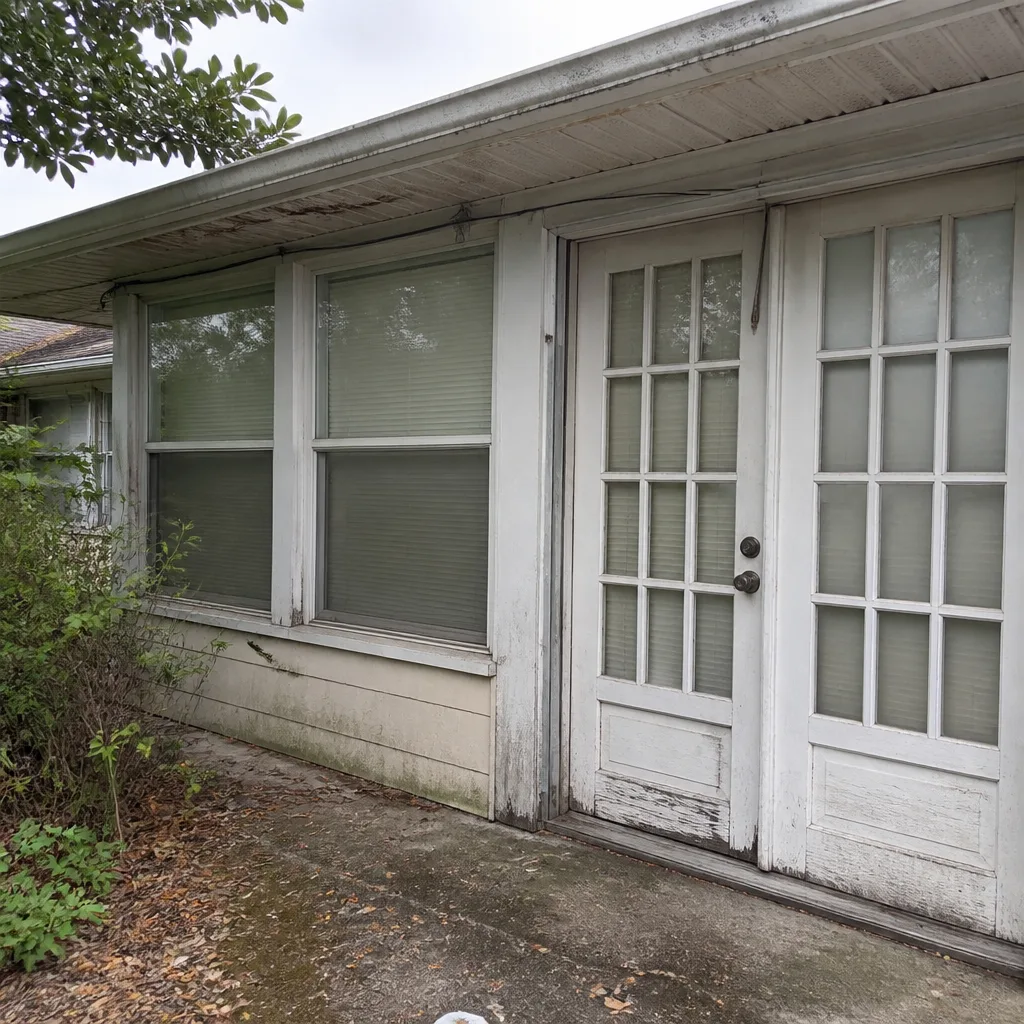 Before
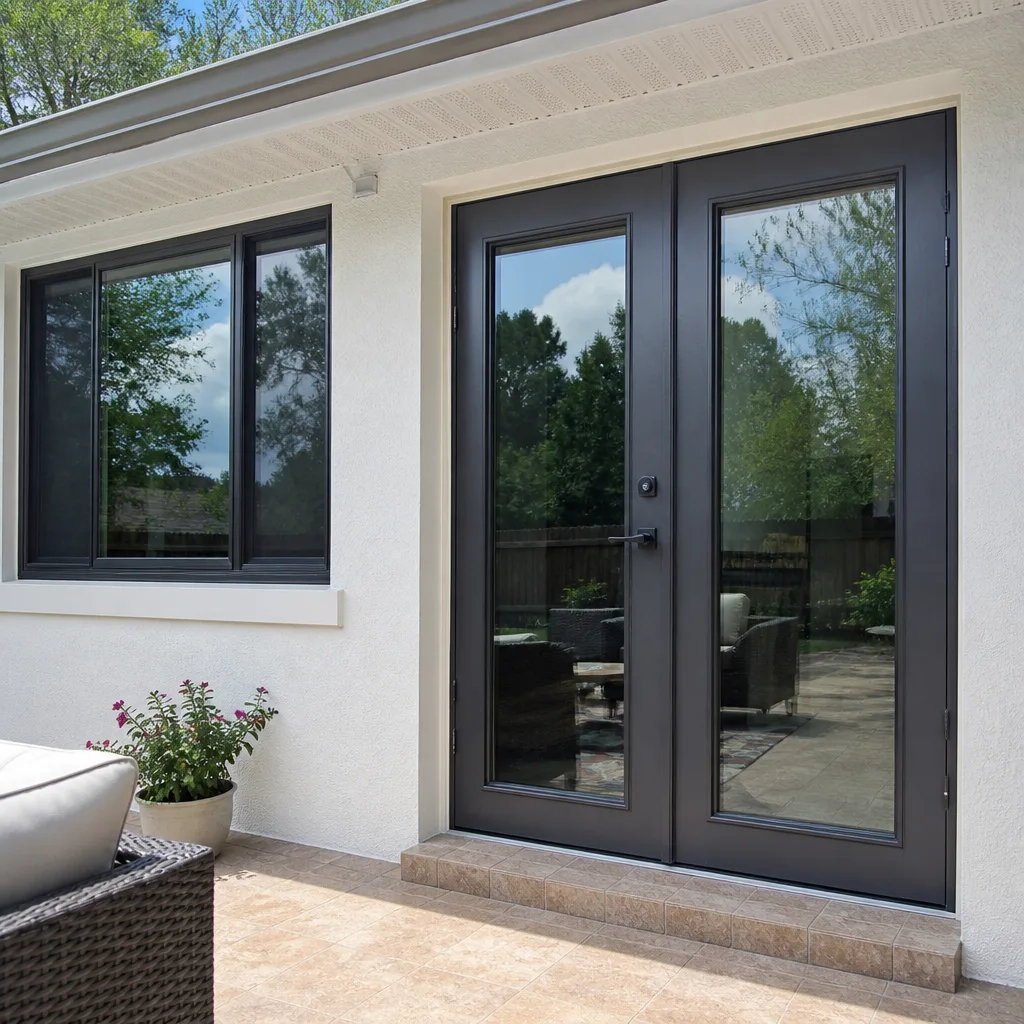 After
AfterTable of Contents
- Why Pinewood Windows Fail Differently
- The Three Environmental Stressors
- Month-by-Month Inspection Schedule
- How to Test Sealant Integrity
- Frame Condition by Material Type
- Weep Holes and Water Management
- Printable Checklist: Pass/Flag/Replace
- Building Your Documented Record
Why Pinewood Windows Fail Differently
Pinewood sits in Miami-Dade County’s coastal zone, where the Atlantic trade wind carries salt aerosol inland farther than most homeowners assume. We’ve measured salt deposition on window frames at homes more than two miles from the shoreline, particularly after easterly wind events that concentrate marine air through the urban corridor. This isn’t theoretical - it’s visible on the documented photo records we produce on every Window Installation in Pinewood job.
The second factor is Pinewood’s position in the South Florida Wet Season corridor. From May through October, relative humidity routinely cycles between 75% morning saturation and 90% afternoon downpour, with daily temperature swings that cause framing lumber to expand and contract. A standard pine rough buck installed at 12% moisture content can swell to 19% during August, then shrink back below 10% in January. That 7-point swing creates movement at the sill-to-buck interface that factory maintenance guides written for Kansas or Ohio never address.
Third, Pinewood’s latitude delivers UV intensity that degrades sealant formulations faster than manufacturer datasheets predict. South-facing windows in Pinewood receive approximately 2,800 annual hours of direct sun exposure. We’ve pulled failed sealant beads from ten-year-old installations that showed complete elastomer breakdown - cracking, powdering, and adhesion loss - while the same product specification in Gainesville remained serviceable at fifteen years.
These three factors intersect at specific points in your window assembly. The maintenance checklist below targets those intersections with inspection methods we’ve refined across 18,000+ openings since 2012.
The Three Environmental Stressors
Understanding what degrades your windows in Pinewood lets you inspect with purpose rather than performing generic routines. Here’s how each stressor manifests and where to look.
UV-Driven Sealant Breakdown
Ultraviolet radiation attacks the polymer chains in polyurethane and silicone sealants, causing surface oxidation that progresses inward. On Pinewood installations, we see this first on the exterior face of horizontal joints - the head cap and sill pan - where UV exposure is maximum and water pooling accelerates chemical degradation. The critical failure mode isn’t cosmetic discoloration. It’s loss of elastomeric recovery: the sealant stops stretching with frame movement, then tears at the bond line.
Inspect for: chalky white residue on dark sealants, surface cracking in a regular pattern (alligatoring), and beads that feel rigid rather than rubbery when pressed with a fingernail. South and west exposures show failure first. We’ve documented complete adhesion loss in as little as six years on unshaded Pinewood elevations.
Salt-Aerosol Frame Oxidation
Salt spray doesn’t cause immediate corrosion. It establishes an electrolyte film that enables galvanic action between dissimilar metals and accelerates aluminum oxidation. On Sightline Windows & Doors Pinewood home installations using aluminum frames from CWS or ES Windows, we specify anodized or fluoropolymer finishes precisely because standard painted coatings show pitting within four years in Pinewood’s coastal zone.
The inspection target is frame surfaces facing east and southeast, particularly lower sash rails where salt-laden air settles. Oxidation appears as a matte, whitish film that doesn’t wipe clean with water. Corrosion is the advanced stage: pitting, bubbling, or orange staining on ferrous hardware. The distinction matters because oxidation can often be remediated; corrosion requires component replacement.
Humidity-Cycle Expansion in Rough-Buck Framing
This is the stressor most Pinewood homeowners never inspect for, and it’s the source of that 60% callback statistic in our opening. The rough buck - the dimensional lumber frame that your window unit fastens into - moves with moisture content. When it swells, it compresses the window’s nailing fin or block frame against the sill pan. When it shrinks, it opens gaps at the shim points.
The symptoms are subtle: operation stiffness in summer that resolves in winter, visible gaps between interior trim and wallboard that appear seasonally, or exterior trim pulling away from siding during dry months. Left unaddressed, the cyclic stress cracks sealant beads and compromises the sill pan’s positive drainage slope. We’ve replaced full window units in Pinewood where the rough buck had compressed the sill pan to zero slope, creating a reservoir that rotted the subfloor.
Month-by-Month Inspection Schedule
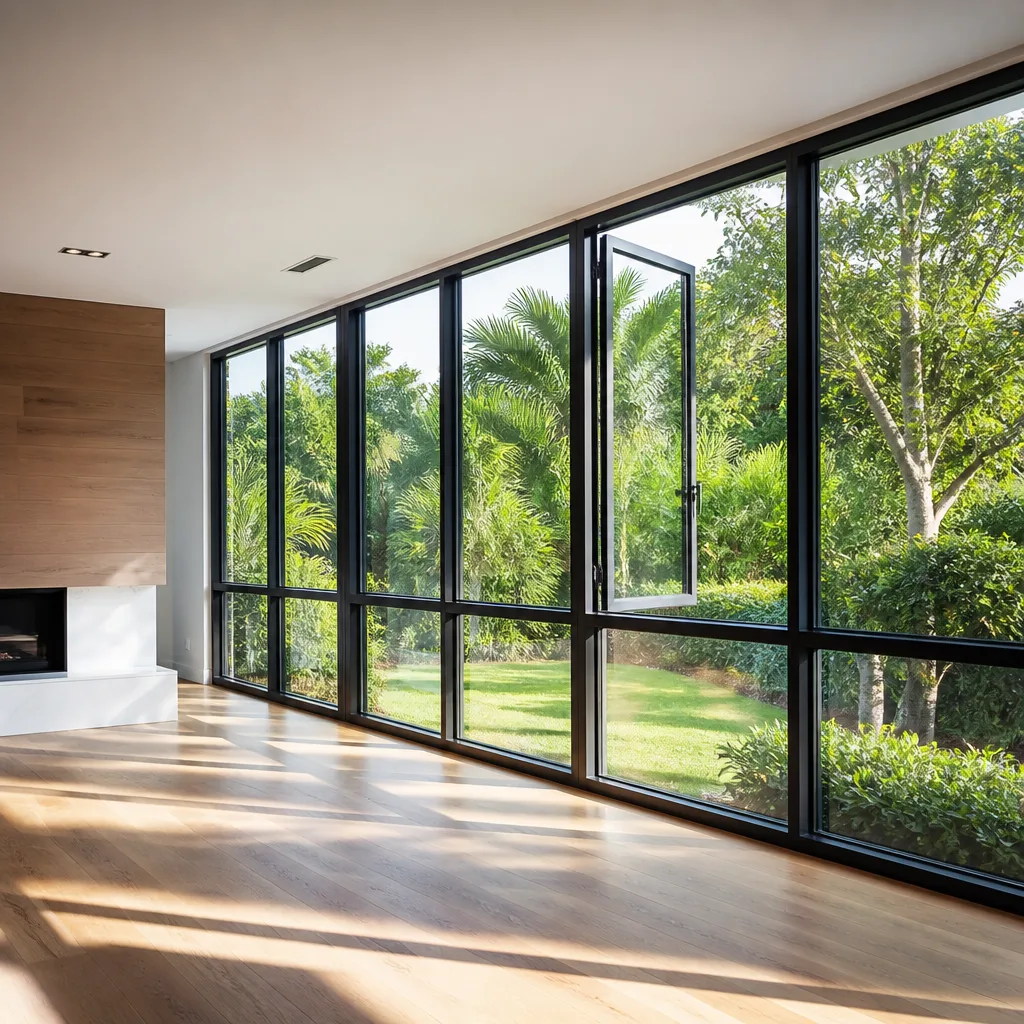
Pinewood’s weather calendar creates three inspection windows that align with actual risk periods, not arbitrary calendar dates. Each inspection takes 45-60 minutes for a typical single-family home with 12-15 window units.
May: Pre-Hurricane-Season Inspection
Perform this inspection by the second week of May, before the subtropical high establishes consistent easterly flow and the wet season begins in earnest. The goal is to identify and address vulnerabilities before they’re tested by tropical weather.
- Exterior sealant survey: Walk every elevation with binoculars, then close inspection at arm’s length. Tag any bead showing alligatoring, adhesion loss, or gap formation. South and west faces get priority attention.
- Hardware and lock function: Cycle every operator, lock, and vent. Corroded hardware from winter salt accumulation will show stiffness or grinding. Lubricate or flag for replacement.
- Impact-rated glazing verification: For Window Replacement in Pinewood installations with impact glass from Mr-Glass or ECO Window Systems, inspect laminate edges for delamination (milky whitening at the glass perimeter) and frame gaskets for compression set.
- Drainage path confirmation: Verify that sill pan extensions discharge clear of wall cladding and that landscape mulch or debris hasn’t blocked the exit. One wet season of blocked drainage can submerge the sill pan daily.
August: Peak-Humidity Check
This is the inspection most homeowners skip, and the most consequential. August represents the stress peak: maximum moisture content in framing, maximum thermal expansion in vinyl and aluminum, and maximum biological activity in any water intrusion.
- Rough-buck interface probe: Remove interior trim at one representative window per elevation. Inspect the gap between window frame and rough opening with a flashlight and feeler gauge. A gap exceeding 3/16 inch at any shim point indicates shrinkage stress; contact between frame and buck indicates swelling compression. Both require adjustment.
- Moisture content reading: If you own a pin-type moisture meter, test the rough buck at the sill. Readings above 20% indicate bulk water intrusion, not ambient humidity. We’ve found active leaks in Pinewood homes where the homeowner smelled nothing and saw no interior staining.
- Interior air seal check: On a windy day, hold a smoke pencil or thin ribbon near frame perimeters. Horizontal airflow indicates failed cavity insulation or missing backer rod. In Pinewood’s air-conditioned homes, this is also an energy penalty: you’re cooling the wall cavity.
- Condensation pattern review: Record which units show interior surface condensation. In August, some sweating on single-pane storm panels is normal; condensation between panes of an IG unit is seal failure and requires replacement.
November: Post-Storm Inspection
After tropical season ends, assess what actually occurred versus what you assumed. This inspection documents storm performance and establishes baseline condition before the dry season.
- Debris impact survey: Inspect glazing for pitting, scratching, or cracking from wind-driven debris. Impact-rated units from PGT or CGI should show no glass damage; the interlayer absorbs impact energy. Surface damage to frames is acceptable; glass damage is not.
- Sealant stress documentation: Photograph every bead that showed movement during storm wind loading. Fresh gaps at frame-to-wall joints indicate the sealant exceeded its elongation limit. These will fail completely within two years if not addressed.
- Water line evidence: Check exterior sills and trim for staining patterns that indicate water depth during peak rainfall. A water line more than 1/2 inch above the sill pan lip means the drainage path was overwhelmed. This is design or maintenance failure, not storm severity.
- Operational function test: Storm pressure cycling can distort frames. Every unit should open, close, and lock with the same effort as pre-season. Binding or misalignment indicates frame racking that requires adjustment.
How to Test Sealant Integrity
Sealant testing is where most maintenance guides fail Pinewood homeowners. They recommend visual inspection only, which misses the adhesion failures that precede visible cracking. Here’s the two-step method we use on documented post-install photo records.
Step 1: Hand-Pressure Test
Press the sealant bead firmly with your thumb, applying approximately 10 pounds of pressure (enough to compress the bead to roughly half its resting height). A sound bead rebounds immediately to original shape with no permanent deformation. A degraded bead either:
- Remains compressed (compression set - the elastomer has lost recovery)
- Tears at the bond line (adhesion failure - the sealant separates from frame or wall)
- Crumbles or powders at the surface (UV degradation - the polymer has oxidized)
Test at three points per bead: near each end and at the center. Failure at any point means the entire bead requires removal and replacement. Spot repair doesn’t work because adjacent degraded material will fail within months.
Step 2: Moisture-Meter Verification
After the hand-pressure test, use a non-invasive moisture meter (pinless type, set to wood scale) on the wall surface immediately behind the sealant line. Normal reading for painted or sided wall in Pinewood’s dry season: 8-12%. Readings above 15% indicate water is migrating past the sealant, even if the bead looks intact. We’ve documented this exact finding on Pinewood homes where the sealant passed visual and hand-pressure tests but the moisture meter revealed active intrusion.
The combination catches failures that either method alone misses. Hand pressure reveals elastomer degradation; moisture meter reveals hidden breaches. Both readings go on your documented record with the date and window location.
Frame Condition by Material Type
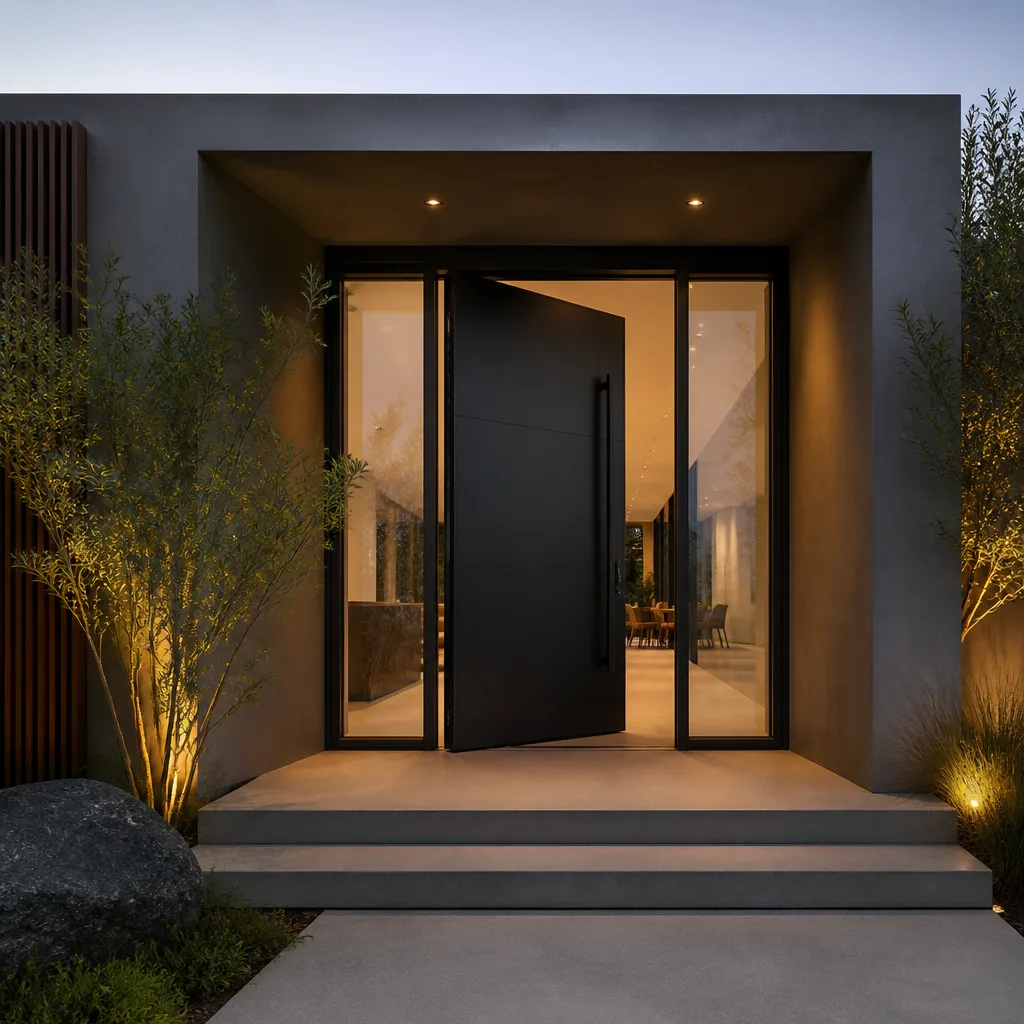
Not all frames fail the same way in Pinewood’s environment. Inspect by material, with specific criteria for each.
Aluminum Frames (CWS, ES Windows, PGT, CGI)
Aluminum’s enemy in Pinewood is galvanic corrosion at fasteners and hardware, plus surface oxidation of inadequately finished extrusions. Inspect for:
- Pass: Uniform finish color, no powdering when wiped with a damp white cloth, fastener heads bright with no rust staining
- Flag: Localized chalking that cleans with mild detergent and soft brush, minor fastener discoloration without pitting
- Replace: Pitting deeper than 0.010 inch, bubbling or flaking of finish, rust streaks from fasteners indicating active galvanic cell
On Door Installation in Pinewood projects using aluminum frames, we see accelerated hardware corrosion from splashback at entries without adequate overhangs. Threshold and jamb bottom rails need quarterly inspection, not annual.
Vinyl Frames (ECO Window Systems, certain CWS lines)
Vinyl doesn’t corrode, but it thermally cycles dramatically in Pinewood sun. Dark colors absorb enough heat to soften the profile, which then sets in deformed shape when cooled. Inspect for:
- Pass: Sharp corner profiles, no visible sag in horizontal members, weld lines intact at frame corners
- Flag: Slight bowing in sill or head that doesn’t affect operation, surface fading or chalking that responds to vinyl restorer
- Replace: Permanent deformation exceeding 1/8 inch from design profile, cracked or separated heat-welded corners, brittle fracture in any member
Fiberglass Frames (ViewLux, Therma-Tru)
Fiberglass is the most stable material in Pinewood’s environment but not immune. The failure mode is gel coat erosion exposing the fiber mat, which then wicks moisture. Inspect for:
- Pass: Gloss uniform across surface, no fiber pattern visible, sharp edges with no fraying
- Flag: Gloss reduction that responds to automotive polish, minor edge wear at hardware contact points
- Replace: Visible fiber weave, blistering or delamination, soft spots indicating resin breakdown
Weep Holes and Water Management
This section addresses the single most under-maintained component in Pinewood window installations. Weep holes are the drainage outlets in the sill track of operable windows and the sill pan of fixed units. When blocked, water that the window system is designed to handle becomes water trapped against your wall.
We’ve measured water intrusion depth on blocked-weep installations in Pinewood. In one documented case from 2019, a home near the Pinewood Country Club had weep holes completely occluded by insect nests and paint overspray from a prior contractor. During a typical August afternoon thunderstorm, water accumulated in the sill track to a depth of 1.7 inches before finding alternative exit paths - which meant it overflowed into the wall cavity. The subfloor rot extended four feet into the room before any interior symptom appeared.
Weep Hole Inspection Protocol
- Locate all weep holes: On single-hung and sliding windows, they’re typically in the exterior face of the sill track, spaced 12-18 inches apart. On some ECO Window Systems and Mr-Glass impact units, they’re concealed behind snap-in covers that must be removed for access.
- Test flow path: Pour one cup of water into the sill track. It should exit the weep holes within 30 seconds. If water stands, the hole is blocked or the internal channel is obstructed.
- Clear with mechanical action: Use a weep hole tool (a small, soft bottle brush) or a straightened wire coat hanger with the end rounded. Never use compressed air - it drives debris deeper into the drainage channel and can blow out internal baffles.
- Verify exit path: Water should discharge clear of the wall surface. If it runs down the wall, the sill pan extension is misaligned or missing. This is a flag condition requiring correction.
Seasonal Weep Hole Risk Calendar for Pinewood
March-April: Pollen and leaf bud debris peak. Inspect after major pollen events.
May-June: Insect nesting begins. Paper wasps and mud daubers favor weep hole cavities.
July-September: Maximum rainfall volume. Weekly verification during active tropical systems.
October-November: Post-storm debris accumulation. Clean after each named storm passage.
December-February: Minimal risk, but verify function before dry season ends.
Printable Checklist: Pass/Flag/Replace
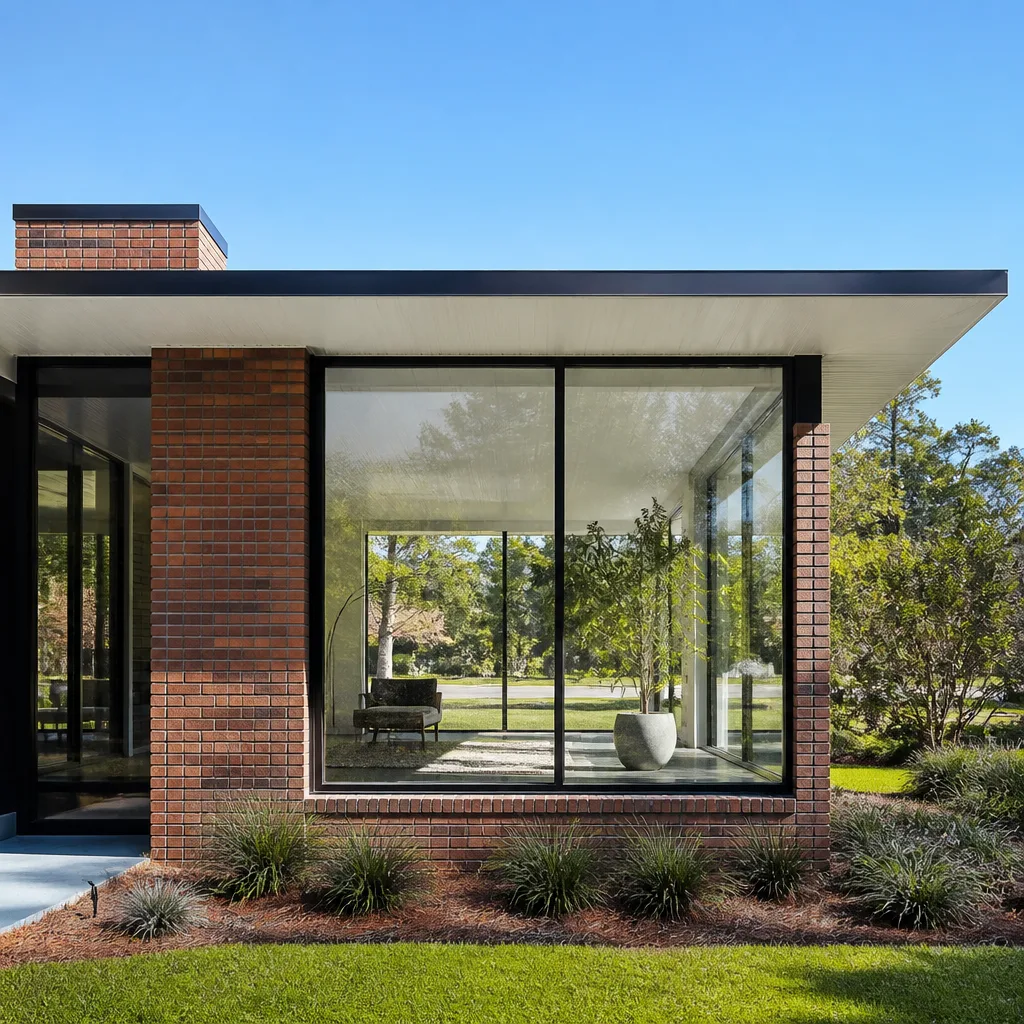
Use this table to produce a dated written record for each inspection. Print one copy per window unit, or compile on a spreadsheet with unit identifiers (room + wall + sequence from left).
| Component | Pass | Flag | Replace |
|---|---|---|---|
| Exterior sealant bead | Rebounds to shape, no surface cracking, adhesion intact full length | Localized stiffness or minor surface chalking; monitor in 90 days | Compression set, adhesion loss, alligatoring, or moisture meter >15% behind bead |
| Frame finish (aluminum) | Uniform color, no residue on white cloth wipe, fasteners bright | Chalking removable with detergent; minor fastener discoloration | Pitting >0.010″, finish bubbling, rust streaks from fasteners |
| Frame profile (vinyl) | Sharp corners, no sag, weld lines intact | Slight bow without operational effect; surface fading | Deformation >1/8″, cracked welds, brittle fracture |
| Frame surface (fiberglass) | Uniform gloss, no fiber visible, sharp edges | Gloss reduction responding to polish; minor edge wear | Visible fiber weave, blistering, soft spots |
| Weep holes | Water exits within 30 seconds, clear of wall | Slow drainage >30 sec but <2 min; clear and retest | No drainage, internal obstruction, or missing weep covers |
| Hardware/locks | Smooth operation, positive latching, no play | Stiffness responding to lubrication; minor corrosion on non-critical parts | Failed latching, broken components, corrosion affecting function |
| Glazing (impact-rated) | No glass damage, laminate edges clear, interlayer intact | Surface scratches not penetrating outer lite; minor gasket compression | Cracked glass, delaminated edges, interlayer bubbling or discoloration |
| Interior air seal | No detectable airflow with smoke pencil | Minor leakage at single point; add backer rod and sealant | Multiple leak points or visible daylight through frame perimeter |
| Rough-buck interface | Gap 1/16-3/16″ at shims, no contact or excessive opening | Gap at one shim point; monitor seasonally | Frame contacting buck, gap >3/16″, or moisture content >20% |
Flag conditions require re-inspection in 90 days or after the next major weather event, whichever comes first. Replace conditions require professional evaluation. Sightline’s 365-Day Done Right Promise covers installation-related failures identified in this protocol; your documented record supports any warranty claim.
Building Your Documented Record
The Haven Standard’s Evidence on Every Job clause means we document everything we touch. Your maintenance record should meet the same standard. Here’s how to build it without professional equipment.
Minimum documentation: Dated checklist for each inspection, with unit identifiers and pass/flag/replace markings. Store digitally with cloud backup - paper records don’t survive Pinewood’s humidity.
Recommended documentation: Add photographs of every flag and replace condition. Use your phone’s timestamp function. Include a reference object (ruler, coin) for scale. Photograph from two angles: one showing location context (which window, which wall), one showing detail.
Optimal documentation: Maintain a single spreadsheet with columns for unit ID, inspection date, inspector, component ratings, photo file names, and follow-up actions. This becomes a transferable asset when you sell your Pinewood home. We’ve had buyers specifically request maintenance records for window installations; homes with documented care histories command attention in a market where hidden water damage is a known risk.
Your record also protects you in warranty disputes. Manufacturer warranties typically require evidence of maintenance; installation warranties like our 365-Day Done Right Promise require evidence that the failure is installation-related, not maintenance-neglect. A dated, photographed checklist satisfies both.
Common Mistakes to Avoid

- Power-washing frames and sealant: The pressure drives water past seals and into the wall cavity. We’ve traced multiple Pinewood water damage claims to aggressive spring cleaning. Use low-pressure hose and soft brush instead.
- Applying silicone sealant over old polyurethane: The new bead won’t adhere to the old, creating a two-layer failure. Complete removal to bare substrate is required for any sealant replacement.
- Ignoring the rough-buck interface: This is the 60% callback joint. Interior trim removal takes ten minutes and reveals problems invisible from either side.
- Cleaning weep holes with compressed air: As noted above, this blows debris into the drainage channel and can destroy internal baffles on impact-rated units from Mr-Glass and PGT.
- Assuming impact-rated means maintenance-free: Impact glass and heavy-duty frames tolerate more abuse, but the sealant and drainage systems are identical to standard units. They fail the same way if neglected.
- Waiting for interior symptoms: By the time you see wall staining or smell mustiness, water has been in the cavity for months or years. The inspection protocol above catches intrusion before it becomes interior damage.
When to Call a Professional
Some conditions exceed homeowner maintenance scope. Call for evaluation when you document any replace condition on the checklist, when moisture meter readings exceed 20% at the rough buck, when operation binding indicates frame racking, or when you find active insect infestation in the wall cavity. Don’t attempt sealant replacement on windows above ground level without proper fall protection.
Sightline Windows & Doors Pinewood offers free estimates in Pinewood - call (786) 574-6217. We’ll review your documented maintenance record, perform our own measured survey, and give you a written scope and price before any work is proposed. Haven Clause 1: the measurement and the quote are the same document. Bring us a competitor’s written estimate and we’ll provide a free second opinion at no charge.
Frequently Asked Questions
Professional window maintenance inspection in Pinewood typically runs $150-$300 for a single-family home with 12-15 units, plus $8-$15 per linear foot for sealant replacement and $45-$85 per unit for hardware repair or replacement. Full-service maintenance contracts with quarterly visits range from $400-$700 annually. Call (786) 574-6217 for an exact quote - estimates are free.
At Sightline, no. Haven Clause 1 means the written price before any work starts is the final price. We don’t quote inspection-only and then discover “unforeseen” conditions. Our measured survey documents what we found; the written scope documents what we’ll do; the price connects the two. No change orders, no surprises.
Aluminum and vinyl window installations in Pinewood should deliver 20-25 years of service with documented maintenance; fiberglass extends to 30+ years. See our Windows & Doors Cost Breakdown: The Pinewood Homeowner’s Reference for 2026 for detailed replacement cost planning. Sealant requires replacement at 7-12 years depending on exposure. Hardware typically needs service at 10-15 years. The critical factor is catching rough-buck movement and weep hole failures before they cause cascading damage.
Routine maintenance - sealant replacement, hardware repair, weep hole cleaning - does not require permitting in Miami-Dade County. Component replacement affecting the structural opening or impact rating does. For details on local requirements, read Windows & Doors Permits, Codes & Inspections in FL: What You Need to Know. Sightline pulls all required permits and passes all inspections as standard practice; the permit number appears on your written scope.
Match the original specification by substrate and movement capability. Aluminum-to-stucco joints need different sealant than vinyl-to-wood. Use only products rated for UV exposure and joint movement of +/- 25% minimum in Pinewood’s climate. We specify sealant by manufacturer and product number on every replacement scope, not by color match alone.
Impact rating is a system certification, not a glass-only property. Replacement of any component - glass, frame, hardware, or anchorage - with non-certified parts voids the system rating. Maintain documentation of any repairs. For Window Replacement in Pinewood projects, we specify impact-rated assemblies with Miami-Dade NOA (Notice of Acceptance) numbers that you can verify with the county. If you cannot produce documentation of original certification, assume standard rating and evaluate accordingly.
The Bottom Line
Pinewood window maintenance isn’t about keeping glass clean. It’s a structured inspection protocol targeting the three environmental stressors that actually degrade installations here: UV sealant breakdown, salt-aerosol frame oxidation, and humidity-cycle rough-buck movement. Execute the May, August, and November inspections with the hand-pressure and moisture-meter methods described. Document everything with dated checklists and photographs. Address flag conditions within 90 days and replace conditions immediately. Your reward is extended service life, protected warranty coverage, and a transferable maintenance record that demonstrates care to future buyers. The 60% of callbacks that occur at the sill-to-buck interface are preventable with ten minutes of interior trim removal twice yearly.
Written by Sonia Raman, Owner at Sightline Windows & Doors Pinewood, serving Pinewood since 2012.
Six Reasons Homeowners Choose Sightline Windows & Doors Pinewood

Impact systems engineered to design pressures up to +/-100, matched to your wind zone - your openings hold when the storm arrives.
Low-E insulated impact glass from our manufacturer lines commonly cuts monthly cooling bills 20-30%.
Laminated impact glass shuts out up to 40% of outside noise - traffic, neighbors, weather.
Monitoring services run $30-90 a month. Laminated impact glass resists forced entry around the clock, with no subscription.
Florida homeowners average around 25% savings on the windstorm portion of their policy after protecting every opening - some homes qualify for more.
A full impact package upgrades curb appeal, buyer confidence and appraised value in one project.
Other Sightline Windows & Doors Pinewood Services
What Neighbors Say About Sightline Windows & Doors Pinewood